Should You Use ChatGPT to Write Your Resume?
When ChatGPT helps, when it hurts, and the safest way to use AI to improve your resume without losing credibility or control.
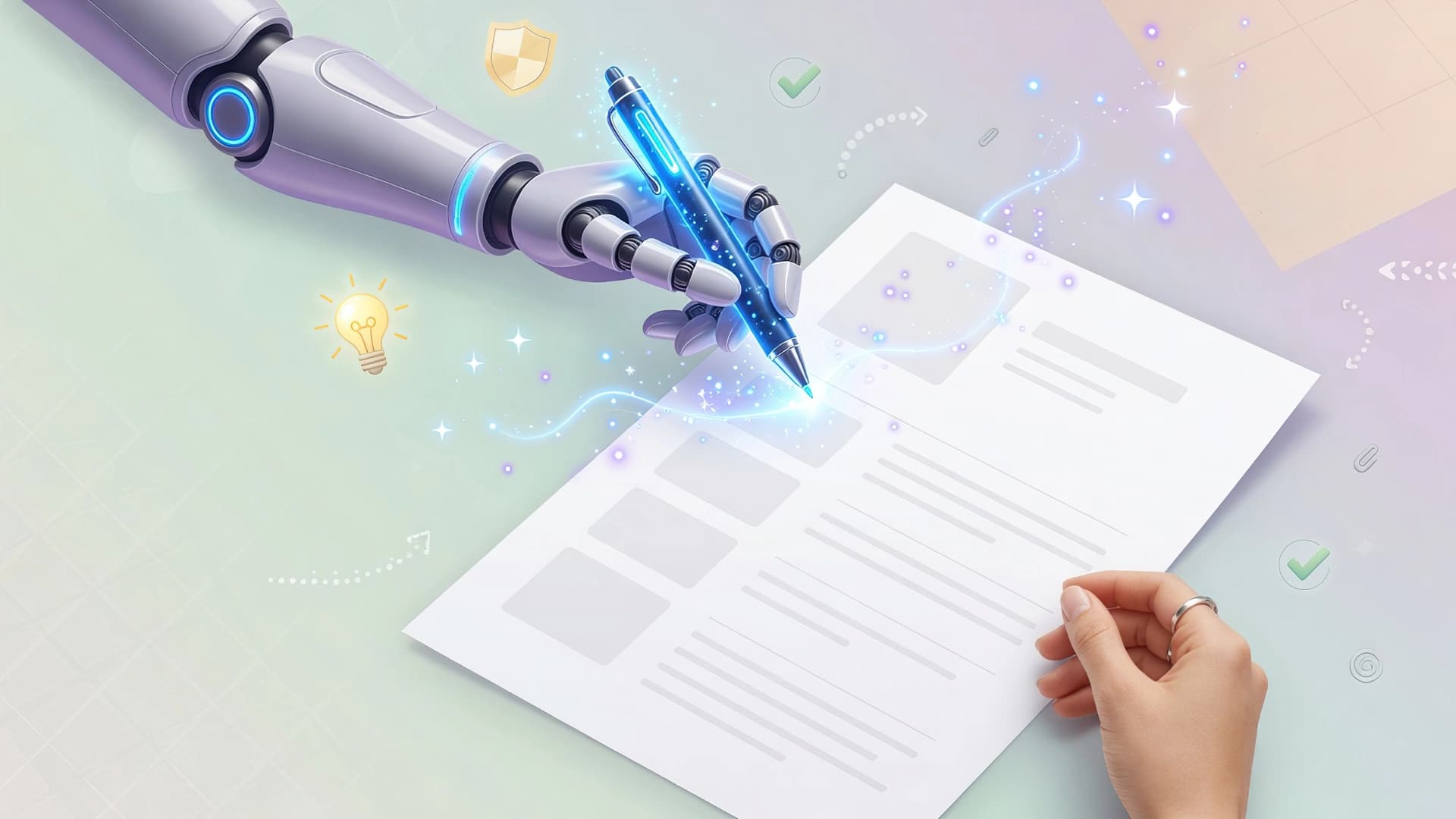
Yes, you can use ChatGPT to help write your resume. The stronger answer is that you should use it as a coach, editor, and tailoring assistant, not as the primary author of your career story.
Where ChatGPT is genuinely useful
ChatGPT is strongest at the parts of resume writing that slow people down: turning weak bullets into clearer ones, comparing a resume to a job description, improving phrasing, and helping you find a better top-of-page summary.
In practice that usually means brainstorming stronger bullet language, tailoring wording to a job description, spotting likely keyword gaps, polishing grammar and giving structure to a rough first draft.
If the problem is specifically your opening summary, the resume summary guide gives you a more reliable structure than asking the model to improvise from scratch.
Why full automation is usually a bad idea
Resumes are high-risk documents for hallucination. The problem is not that the writing sounds too polished. The problem is that it may sound more specific, more senior, or more measurable than the truth.
If the model invents scope, metrics, tools, or ownership, you now have a stronger-looking resume and a weaker interview position. That tradeoff is not worth it.
Privacy is the first serious risk
A resume usually contains personal data. Before you paste anything into a public AI tool, remove information that the model does not need in order to help with wording and structure.
That usually includes your full address, contact details you do not need for drafting, reference names and contact information, and confidential employer, client, or project details. Work from an anonymized draft when possible. That gives you most of the upside with less exposure.
The best workflow is human-led and AI-assisted
Start with facts, not prompts. Build a fact-rich master resume first. Then use ChatGPT to improve structure, clarify evidence, and tailor wording to the role.
- Start from your real roles, dates, tools, and outcomes.
- Scrub sensitive information before pasting.
- Ask the model to analyze and rewrite without inventing.
- Verify every line against reality before it goes into the final file.
- Keep the final version simple enough for ATS and easy enough for humans to scan.
Once the draft is cleaner, run it through the resume analyzer to catch places where the AI improved polish but weakened credibility or clarity.
Best rule of thumb
If you would feel uncomfortable explaining how a line got into your resume, or you could not defend it in an interview, it should not stay in the document.
Good uses for ChatGPT on a resume
Good uses include rewriting a vague bullet into a more concrete one, suggesting a tighter summary at the top, comparing your resume with a job description, simplifying awkward language, and flagging where you need stronger evidence or metrics.
Bad uses for ChatGPT on a resume
Bad uses include inventing achievements or numbers, writing the whole resume from zero without factual source material, choosing a more senior title than your real role supports, filling a skills section with tools you cannot defend, or producing a polished but generic resume that sounds like everyone else.
Prompt patterns that work better
The model works better when the task is narrow. Ask it to analyze, rewrite, or compare. Do not ask it to “write my resume” without constraints.
- “Rewrite these bullets to be clearer and more achievement-based without inventing anything.”
- “Compare my resume with this job description and tell me what is missing or under-explained.”
- “Suggest a stronger summary for the top of my resume based only on the experience below.”
If you also want the file to stay readable in application systems, pair that work with the ATS guide so better wording does not accidentally turn into worse formatting.
How to sanity-check the final version
Before you submit, pressure-test the document as if you were already in the interview.
- Can you explain every bullet out loud without improvising?
- Are the numbers, dates, and titles fully accurate?
- Does the wording match the role without sounding copied from the job ad?
- Would the resume still make sense in plain text and simple formatting?
If you want another layer of review, run it through the resume analyzer and then use the keyword playbook or the glossary to tighten the final wording.
That is the right role for CVoria too: not writing the story for you, but helping you catch weak evidence, vague language, and obvious mismatch before you apply.
FAQ: using ChatGPT for a resume
Should I let ChatGPT write my whole resume?
Usually no. It is much better as a reviser and coach than as the sole author.
Can ChatGPT help with ATS keywords?
Yes, if you use it to surface missing terms and integrate them truthfully. It becomes risky when the model starts stuffing keywords or exaggerating your fit.
What is the biggest mistake people make with AI-written resumes?
Letting the model sound more impressive than the real evidence supports. That creates problems later when the interview gets specific.